Miles Davis — Kind of Blue on Vinyl: Which Pressing Is Worth It
A 1959 original starts around $25, a modern reissue around $13, and the expensive originals have a speed error the cheap ones fixed. The pressings compared.
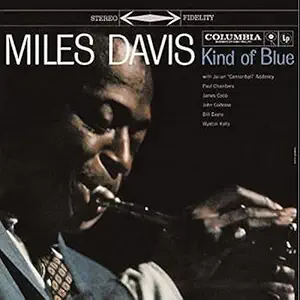
Kind of Blue is the best-selling jazz album ever made, which means it has been pressed more times, in more places, over more decades than almost any record you could name. That’s good news — you can own it cheaply — and it’s also why “which one should I buy” is a genuinely hard question here in a way it isn’t for a record with three pressings.
The short answer is that this is one of the rare cases where the expensive vintage copies are not automatically the better listen. Here’s the spread, and then the reason why.
| Pressing | Lowest listed | Copies for sale | Own / Want |
|---|---|---|---|
| 2010 French collection reissue cheapest | $8.51 | 9 | 3,349 / 1,8100.54× |
| 2010 US Columbia/Legacy reissue | $13.00 | 36 | 25,505 / 7,0810.28× |
| 2015 European repress | $20.28 | 117 | 22,864 / 2,9330.13× |
| 1959 US mono (Columbia CL 1355) | $25.00 | 22 | 4,194 / 6,9621.66× |
| 1959 US stereo, six-eye (CS 8163) | $50.00 | 4 | 2,958 / 5,5531.88× |
| 2021 Analogue Productions UHQR, numbered | $65.64 | 93 | 7,844 / 2,1430.27× |
| 1959 US stereo, six-eye — separate entry | $161.38 | 5 | 456 / 2,1084.62× |
| 1959 US stereo promo, six-eye | $550.00 | 1 | 260 / 2,1218.16× |
Lowest listed price is the cheapest copy on the Discogs marketplace at the time shown, before shipping, and across all sleeve and media conditions — treat it as a floor, not a going rate. “Own / Want” is how many collectors have the pressing in their collection versus how many have it on their wantlist; a ratio above 1 means demand outruns supply.
The speed problem, and why it matters to your wallet
When Columbia’s engineers went back to the vault in 1992, they found something that had gone unnoticed for thirty-three years: the stereo tape machine used at the first session had been running about one percent slow. Recorded slow means played back fast, so on every stereo copy pressed from that master, the first three tracks on side one — “So What,” “Freddie Freeloader,” and “Blue in Green” — run slightly sharp. The 1992 discovery led to speed-corrected masterings from the mid-nineties onward, and it’s a headline feature of the Analogue Productions edition in the table above.
Sit with what that means for the prices. The 1959 stereo pressings — the ones at $50, $161, and $550 — are the ones with the error. The $13 modern reissue is corrected. If your goal is to hear the album as the musicians played it, the cheapest widely-available copy is closer to the truth than the copy costing forty times more.
That doesn’t make the originals worthless. It makes them artifacts. A six-eye Columbia stereo copy is a beautiful object with real history in it, and plenty of listeners prefer its analogue character despite the pitch. Just buy it knowing which of the two things you’re buying.
Reading the rest of the table
The modern reissues are the value. The 2010 Columbia/Legacy pressing has over 25,000 owners and a want ratio of 0.28 — four owners for every hunter — which is exactly what a permanently in-print record looks like. The 2015 European repress has 117 copies listed right now. Neither will ever be scarce, and neither needs to be.
Original mono is the sleeper. The 1959 mono pressing shows 4,194 owners against 6,962 wants — a ratio of 1.66, the second-strongest demand in the group — yet copies start around $25. Mono was the primary format in 1959; plenty of collectors consider it the more coherently mixed version, and it sidesteps the stereo speed issue entirely because it came from a different tape. For a genuine 1959 Columbia pressing, that is not much money.
The gap between the two stereo entries is the lesson in miniature. Discogs lists more than one 1959 US stereo release, and they price very differently — $50 against $161 — because they’re distinguished by pressing details like matrix numbers and label variants that don’t show up in a search result. Before you pay the higher number, make sure the copy in front of you actually matches the entry you’re pricing against.
The promo is a collector’s item, not a record. One copy listed, 2,121 people wanting it, $550. That ratio of 8.16 is the strongest in the table by a distance, and it’s a fair price for what it is. It’s also not a thing anybody should buy in order to listen to Kind of Blue.
What to actually do
If you want the music: the modern Columbia/Legacy reissue, around $13, speed-corrected and easy to find in clean condition.
If you want the best-sounding version and have the budget: the Analogue Productions edition, which is the corrected mastering done carefully. Ninety-three copies are listed, so there’s no urgency.
If you want a piece of 1959: the mono. It’s the strongest combination of genuine originality, historical correctness, and price on this whole list.
And whatever you buy, remember that “lowest listed” is a floor across every condition, not a going rate — the cheapest copy of a sixty-year-old record is usually the most played one. Our modern jazz-funk guide picks up the story of where this music went next, and if you’re weighing originals against reissues more generally, compare this against Kendrick’s DAMN., where the premium sits on a modern pressing instead.
Prices refresh when we re-run our Discogs snapshot; the date on the table is the date they were true.
Enjoyed this?
Get new reviews and genre guides as they drop.